Friday, April 16, 2010

Rhubarb is Up!

I use the rhubarb as an informal gauge as to whether spring is progressing quickly, slowly, or average.


In previous years the rhubarb has started it's rebirth on April 15 (2008) and April 25 (2009). With only a three-year track record, it's hard to say if it's early or average timing, but most likely average since spring 2009 was generally on the late side.

It's located on the north facing side of the garage so somewhat less affected by early Chinooks (shaded soil there taking longer to warm up than soil in the sun). With today's high reaching around +18 C after a cold week, the temperature in combination with daylight hours seems to have convinced it to wake up.

Friday, April 9, 2010

Heirloom Wheat Varieties

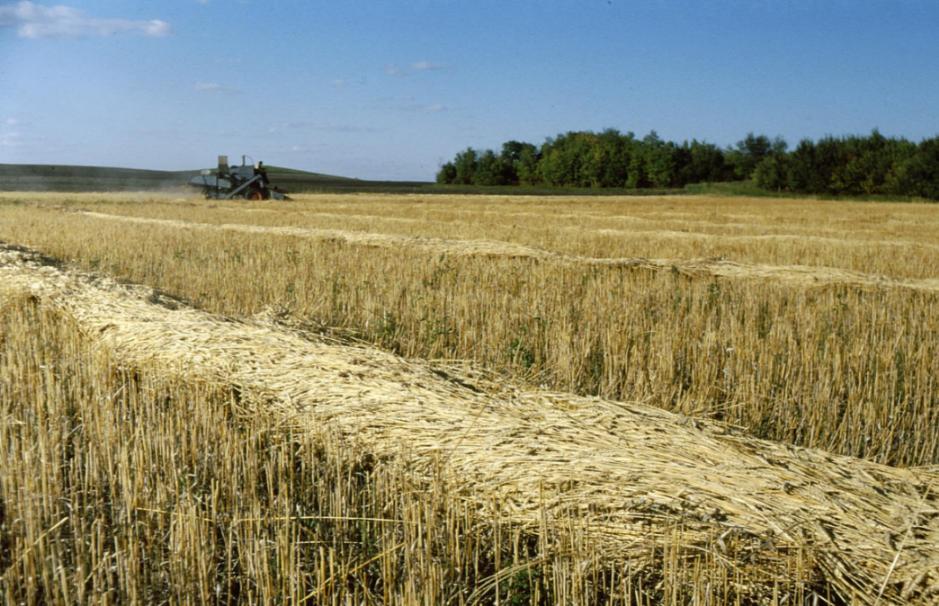
At Seedy Saturday a few weeks back I bought some heirloom (heritage) open-pollinated wheat varieties for some trial plots in the garden this year. Although I grew up on a farm and have some basic knowledge of how the stuff grows, I have not attempted to grow grains on a small scale before (except some very small plots many years ago).


This will prove especially interesting when threshing time comes. Machines have been invented to thresh grains for a reason. From what I've read in the history books (and seen in developing countries), it can be a lot of work! Fortunately I've read about some methods for small scale threshing that I'll have to experiment with and that should for the most part eliminate my concerns. More on that in future postings.

Growing ancient varieties of plants seems to be a fad of late and I think a worthy cause to preserve the genetics to prevent extinction. Why? Well, if it wasn't for the efforts of some persevering souls to save some ancient kinds of wheat through the generations I would not be able to enjoy foods like pizza like I once did! The revival of Red Fife Wheat is one such inspiring example, though I have not experimented with this variety yet.

I developed a wheat intolerance a few years back after a bout with the flu. Since then I have discovered that I can tolerate spelt (Triticum spelta), an ancient variety of wheat. The science on this is not very far along yet, so the theories on why this is so are still somewhat speculative. In the meantime I plan to experiment with some other ancient wheat varieties to see what I can stomach and possibly open up new food opportunities while helping preserve and multiply some heirloom varieties.


The varieties I purchased are Utrecht Blue and Polish Wheat. The taxonomy of wheat I have since discovered is somewhat confused at this time, and clarified somewhat on this table. To simplify things I will refer to the "traditional" species names, which can be correlated to other taxonomic systems on the table linked above.

I have read that Utrecht Blue may possibly be Triticum macha but have not been able to confirm this. There seems little info about this wheat variety other than what was provided in the seed catalogue from Jim Ternier of Prairie Garden Seeds (from whom I bought the seeds at Seedy Saturday) which reads: "This variety was still grown around Utrecht, Netherlands in the early 1900's". Since my grandpa grew up in that very region this caught my eye. My ancestors likely grew and ate this same wheat variety! Prairie Garden Seeds has many other heirloom varieties I hope to try in coming years.

Triticum macha has been grouped in the more recent taxonomic systems with Triticum spelta as Hexaploid (6x), Domesticated and Hulled. My body seems to have tagged Triticum aestivum (Common bread wheat) as bad, and for some unknown reason, spelt is OK. So if Utrecht Blue is different enough from modern wheat and possibly similar to spelt, I may be able to eat it without ill effect.

Polish Wheat (Triticum polonicum) is categorized under Tetraploid (4x), Domesticated and Free-threshing along with durum wheat (used to make pasta). I plan to experiment with durum also since it is technically yet another wheat variety different from bread wheat.

One thing I am not sure about is if these two wheat's can cross-pollinate. I may have to grow only one each year over the next two years. More on this topic to come.

Saturday, March 13, 2010

Mystery Moth (Antheraea polyphemus)

Well, since it is still too wintery to be blogging about any real live gardening activity, here is another mystery insect I thought I'd post in hopes of identifying since we had such great help last time.

This huge moth (5 inch or 13 cm wingspan) was found on my Aunt's farm in Saskatchewan on June 7, 1992. Since then we have never identified it (or if we did we did not write it down). I plan to get a book out from the library to attempt to identify it but thought I'd post it here in the meantime. Not sure if it is a common or rare moth. I recall we caught it flying around the outdoor house light, where moths are typically found of course. I remember hoards of them around our lights on the farm, but rarely see them in the city here. Not sure if this is a rural-urban difference, declining numbers over time or Calgary's climate.

UPDATE: The moth appears to be a male Antheraea polyphemus with common name simply Polyphemus Moth (see discussion and links in comments below). They are relatively common in North America and feed on numerous species of trees and shrubs, not dependent on a single species of plant like the wood wasp we found earlier this winter (see link above). They range from southern Canada to northern Mexico. There is a good possibility there are some in Calgary or perhaps in our own yard. We'll keep an eye out.