Showing posts with label Spelt. Show all posts

Saturday, November 27, 2010

Local Organic Spelt Growers

I am researching options for purchasing local organic spelt. My gut reacts strongly to consumption of regular wheat, but I have discovered spelt has no such ill effects.

So far we have been purchasing organic spelt from the Daybreak-Scheresky Mill in Estevan, Saskatchewan (via a health food store in a small Saskatchewan town where the in-laws live). I have been wondering what other options may be out there and cost comparisons, since we use a lot of it. If anyone has info further to what is listed here, please let us know.

I contacted a local Calgary bakery and they said they source most of their spelt from Saskatchewan and Manitoba.

Other sources I have found, so far, via the internet includes:

Grainworks Inc. (Kincaid, SK)
A family farm moved in 2001 from near Vulcan, AB to SW Saskatchewan (near hamlet of Kincaid). They sell various organic products including spelt.

Gold Forest Grains (near Edmonton, AB)
Do not currently grow spelt, but plan to in the near future.

General Directories of Organic Farms

Saskatchewan and Alberta Organic Farm Directory (no spelt growers currently listed)

Calgary Area Organic Crop Growers Directory (no spelt growers currently listed)

Alberta Virtual Farm Tour (no spelt growers currently listed)

This page will be updated as I discover more related info.

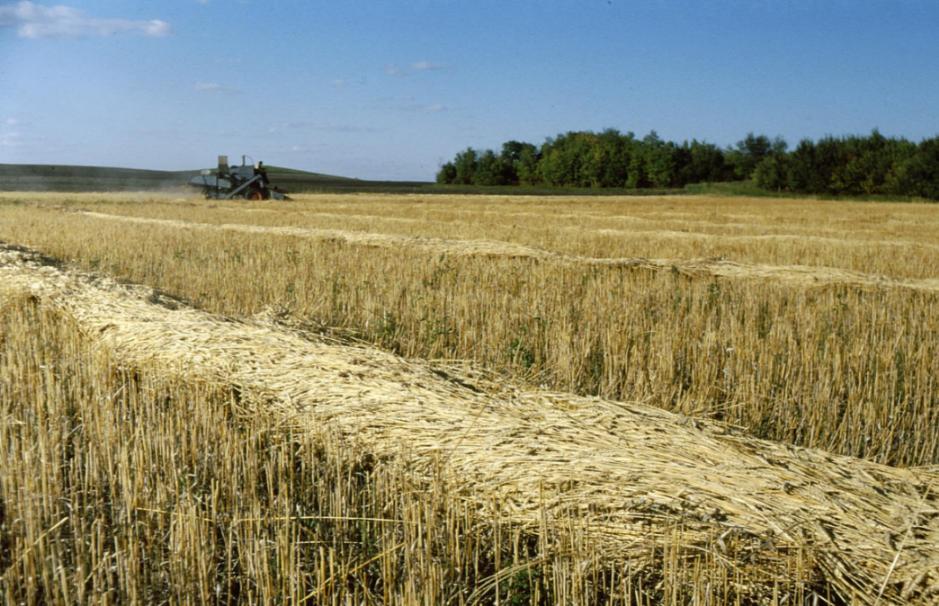
Above photos are of the family farm I grew up on in Saskatchewan.

Friday, April 9, 2010

Heirloom Wheat Varieties

At Seedy Saturday a few weeks back I bought some heirloom (heritage) open-pollinated wheat varieties for some trial plots in the garden this year. Although I grew up on a farm and have some basic knowledge of how the stuff grows, I have not attempted to grow grains on a small scale before (except some very small plots many years ago).


This will prove especially interesting when threshing time comes. Machines have been invented to thresh grains for a reason. From what I've read in the history books (and seen in developing countries), it can be a lot of work! Fortunately I've read about some methods for small scale threshing that I'll have to experiment with and that should for the most part eliminate my concerns. More on that in future postings.

Growing ancient varieties of plants seems to be a fad of late and I think a worthy cause to preserve the genetics to prevent extinction. Why? Well, if it wasn't for the efforts of some persevering souls to save some ancient kinds of wheat through the generations I would not be able to enjoy foods like pizza like I once did! The revival of Red Fife Wheat is one such inspiring example, though I have not experimented with this variety yet.

I developed a wheat intolerance a few years back after a bout with the flu. Since then I have discovered that I can tolerate spelt (Triticum spelta), an ancient variety of wheat. The science on this is not very far along yet, so the theories on why this is so are still somewhat speculative. In the meantime I plan to experiment with some other ancient wheat varieties to see what I can stomach and possibly open up new food opportunities while helping preserve and multiply some heirloom varieties.


The varieties I purchased are Utrecht Blue and Polish Wheat. The taxonomy of wheat I have since discovered is somewhat confused at this time, and clarified somewhat on this table. To simplify things I will refer to the "traditional" species names, which can be correlated to other taxonomic systems on the table linked above.

I have read that Utrecht Blue may possibly be Triticum macha but have not been able to confirm this. There seems little info about this wheat variety other than what was provided in the seed catalogue from Jim Ternier of Prairie Garden Seeds (from whom I bought the seeds at Seedy Saturday) which reads: "This variety was still grown around Utrecht, Netherlands in the early 1900's". Since my grandpa grew up in that very region this caught my eye. My ancestors likely grew and ate this same wheat variety! Prairie Garden Seeds has many other heirloom varieties I hope to try in coming years.

Triticum macha has been grouped in the more recent taxonomic systems with Triticum spelta as Hexaploid (6x), Domesticated and Hulled. My body seems to have tagged Triticum aestivum (Common bread wheat) as bad, and for some unknown reason, spelt is OK. So if Utrecht Blue is different enough from modern wheat and possibly similar to spelt, I may be able to eat it without ill effect.

Polish Wheat (Triticum polonicum) is categorized under Tetraploid (4x), Domesticated and Free-threshing along with durum wheat (used to make pasta). I plan to experiment with durum also since it is technically yet another wheat variety different from bread wheat.

One thing I am not sure about is if these two wheat's can cross-pollinate. I may have to grow only one each year over the next two years. More on this topic to come.